

Information About Steam Heat
If you have steam heat in your house or business, the chances are very good that it was installed before WWII. That means the system is at least 75 years old! Many steam heating systems are older. Why is this method of heating buildings so durable and long-lasting? One quick and easy answer is that old steam systems have fewer moving parts than newer systems. This means there are fewer components to break.
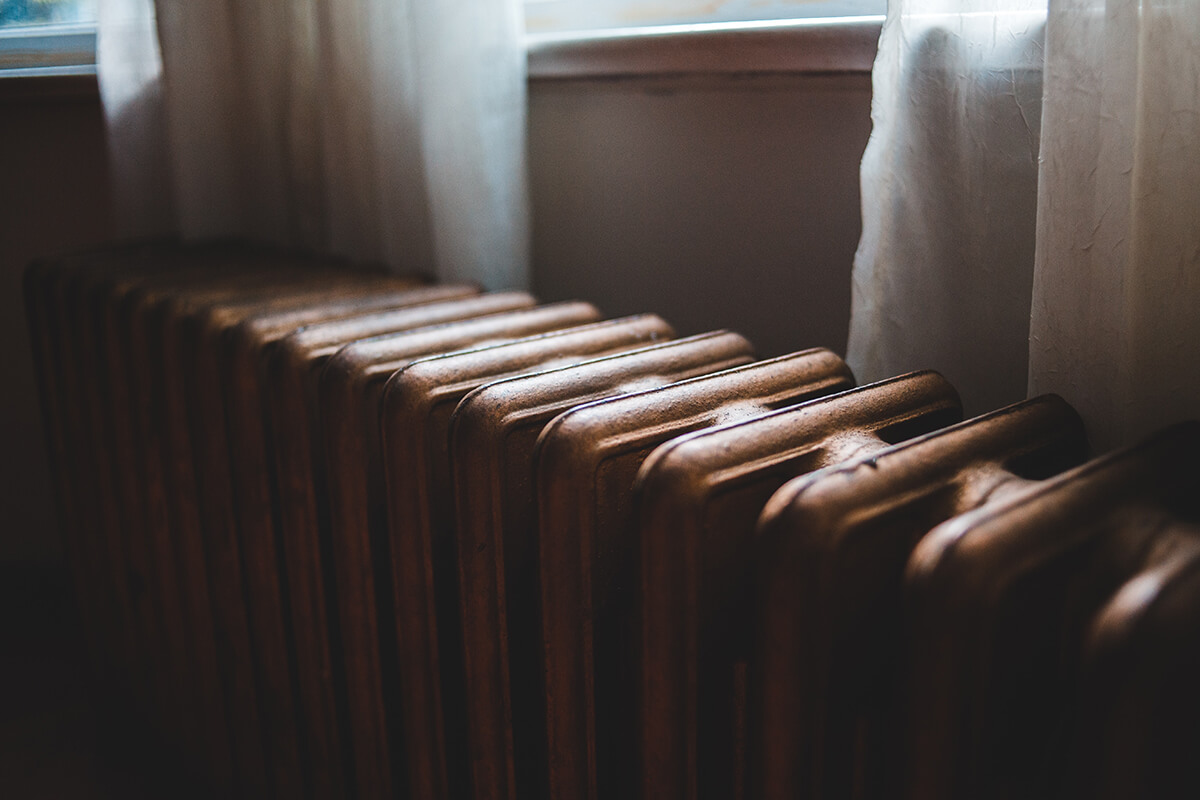
Mechanics of Steam Heating
The basic mechanics of steam heating are equally simple. A boiler heats water and turns it into steam. The steam goes through the system's pipes under pressure to the radiators in the structure, where it heats the radiators that in turn supply heat to the room. When the steam cools and turns back into water, the liquid (condensate) returns to the boiler to be reheated.
Problems with Steam Heat Are Often the Result of Incomplete Modifications
The physics of steam has not changed in the last 75 years, and with proper maintenance a steam boiler, piping and radiators can last indefinitely. However, the external environment has changed, and these changes have required modifications to old systems. Sadly, owners have not always made the modifications correctly or thoroughly. If you are having problems with your heating plant, it may be because of:
No insulation: Steam pipes must be insulated to stay warm enough to maintain the steam and pressure. In the old days, the standard practice was to insulate steam pipes with asbestos. When it became known that asbestos could be dangerous, many homeowners rushed to have it removed. Unfortunately, if they did not know that steam pipes required insulation to function, they did not reinsulate them with fiber glass. Having pipes without insulation means that the steam can cool or revert to water before it even gets to the radiators, making the system at best unbalanced and highly inefficient, and at worst, non-functioning.
No vacuum caused by conversion to oil or gas: Most old steam heating systems were designed to turn the water into steam with a coal-fired boiler. When fired up with coal, the boiler ran constantly. However, coal was dirty and required someone to shovel the coal into the fire to keep the boiler running. In the 1950s, many coal-fired boilers were converted to burn fuel oil or natural gas or were replaced with new boilers that used gas or oil.
For many, replacing a coal burner with something cleaner and less labor-intensive was a change for the better. But this alleged improvement created an unintended problem. The fire in a coal boiler burned constantly once the boiler started up. In contrast, oil or natural gas-fired boilers turn off periodically. This means that the vacuum in the pipes and radiators created by having the constant heat of a coal burner disappeared every time the gas or oil boiler fire went out. To correct for this requires much larger vents than those in the old coal-fired boilers. Then, the air in the pipes and radiators can get out of the system quickly enough to let the steam move through the system.
Contact Veteran Steam Heat of Rhode Island
To fix problems like these requires the help of someone who understands old coal burners and knows what can happen if they are not converted properly. In short, you need someone like Doug Goss at Veteran Steam Heat of Rhode Island to diagnose and correct problems caused by incorrect conversions or lack of insulation. To learn how we can help you with your steam heating system, call us at 401-369-7076 to schedule an appointment. You may also contact us online.

Call us! We can help 401-369-7076
Contact us
Veterans Steam Heat of RI
25 Oakdale Ave
Johnston, RI 02919
Ph: 401-369-7076